
GEOTECH REPORTS
DO YOU NEED ONE?
Written by Okkem Design
“Do I need a geotechnical report?” It’s one of the most common questions we hear at the start of a project, and the answer ultimately revolves around risk, budget, and your tolerance for uncertainty.
A geotechnical (or “geotech”) report provides site-specific information about the soils on a property. This includes things like the soil’s potential for shrinking or swelling, the soil’s ability to resist pressure from the top or side, the presence of water below grade, and other important design parameters. This information is typically obtained through some combination of field observations, test pits, soil borings, and laboratory testing. The results are delivered in the form of a letter or report, and that information is then used as the basis for analysis and design of foundations and earth retaining structures.
Without soil information, engineers have to base their designs on conservative, code-compliant assumptions that generally perform well across a wide range of soil conditions. This approach is common and acceptable, especially on smaller residential projects, but it does introduce more uncertainty because the design is based on assumptions rather than site-specific data. It can also lead to foundations that are larger or more expensive than the site actually requires. When real site data is available, the design can often be better matched to the property, which may reduce both uncertainty and unnecessary cost.
For small residential projects, that uncertainty is often manageable. The potential consequences of soil-related movement are usually limited, and the added cost of a conservative foundation is often modest relative to the overall project. That is why many homeowners choose to forgo a geotechnical report and save on upfront costs and time. That tradeoff can change depending on the site. A geotechnical report becomes more valuable when soils are known or suspected to be expansive, when there are visible foundation issues, steep slopes, drainage concerns, or unknown fill. When those factors are present, site-specific information can reduce uncertainty and help the foundation design better match the actual conditions.
So… Do you need a geotechnical report? Sometimes the answer is made for you. A city, county, or other governing authority may require one, although that is not typically the case on smaller residential projects. More often, the decision comes down to priorities, budget, and tolerance for uncertainty.
Our firm’s position is that a geotechnical assessment and report is always a good idea. It gives the engineering team better information and grounds the design in site-specific data from a qualified professional. Without one, you are accepting additional risk and uncertainty related to foundation performance. That said, we understand that the cost of a report may not make sense for every project, and we are open to working without one when appropriate. Our role is to help clients understand the tradeoffs so they can make informed decisions that align with their project goals. If you’re unsure whether a geotechnical report makes sense for your project, we’re always happy to talk through the specifics and help you weigh the options.
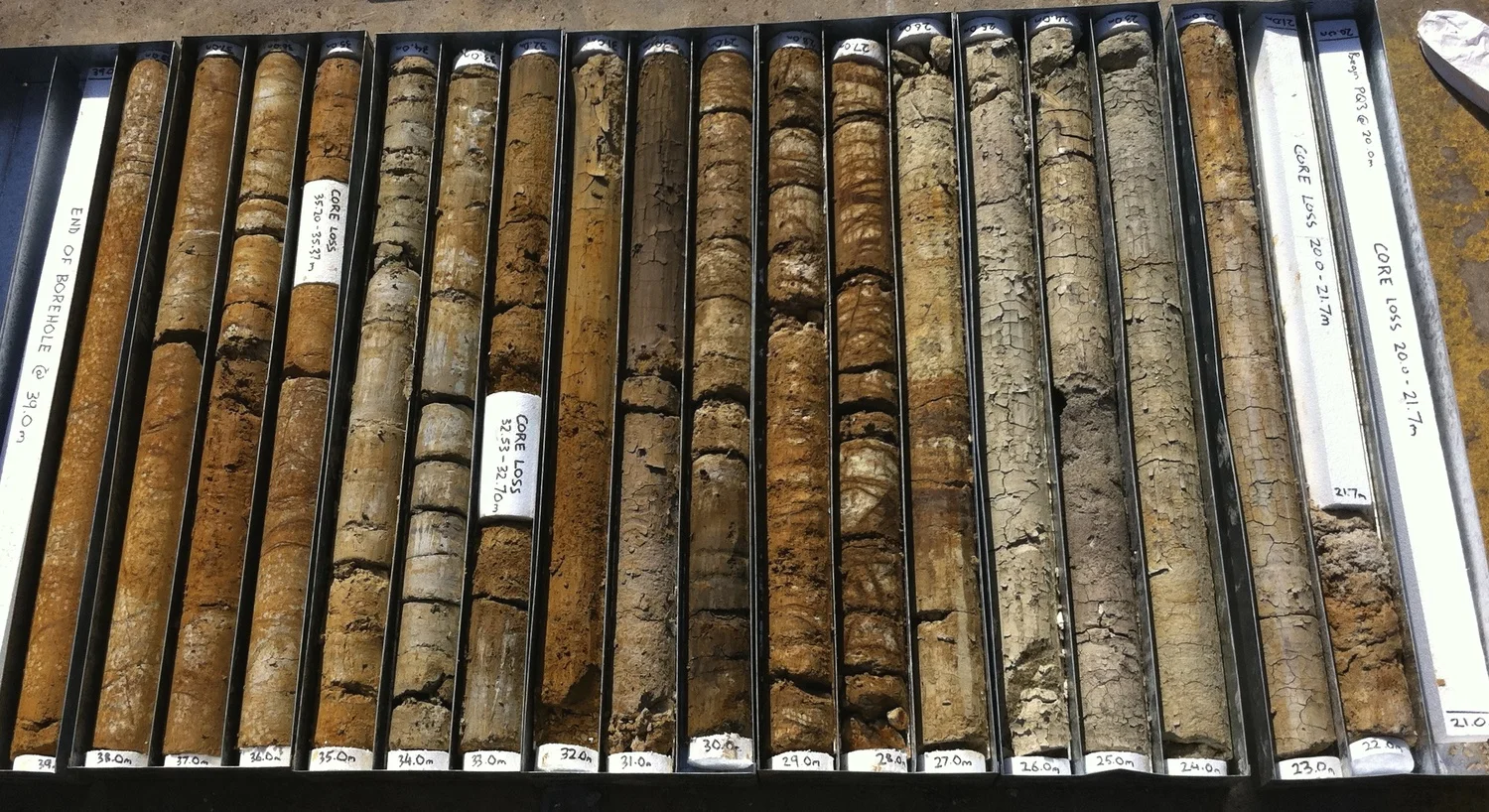
Figure 1: Geo Tech Cores
Image source: Aqua Drill NZ, https://www.aquadrill.nz/services
